
Key takeaways
- Recife and Olinda offer colonial architecture and culture; bus rides connect them to Porto de Galinhas's famous natural pools and snorkeling.
- Northeast Brazil's beaches operate year-round, but the dry season (September–March) offers the best visibility for reef snorkeling.
- A weekly budget of R$ 2,200–3,700 covers mid-range pousadas, meals, and activities; cheaper options bring it down to R$ 1,700–2,300.
- Jangada boat tours, buggy rentals, and fisher-village dining create an authentic experience beyond crowded resort areas.
Northeast Brazil’s Atlantic coast offers 1,500 kilometers of sandy beaches, coral reefs, and colonial towns that draw surfers, snorkelers, and culture seekers year-round. This seven-day itinerary covers Pernambuco and Alagoas states, the region’s most accessible corner, balancing seaside relaxation with authentic colonial history—reachable by direct flights from São Paulo and Rio de Janeiro to Recife (REC airport code, Aeroporto de Recife—Guararapes Gilberto Freyre).
Getting There and Getting Around
LATAM, Gol, and Azul operate daily flights from São Paulo’s Congonhas and Guarulhos airports to Recife, typically R$ 300–800 return depending on advance booking. Flight time is about three hours. From Recife airport, take a prepaid taxi (~R$ 60–80 to central Recife) or rideshare via Indriver or Uber (~R$ 40–60). A rental car is optional; buses connect major towns, though a car offers flexibility for beach-hopping—expect R$ 90–150 daily from agencies like Hertz or Localiza.
The regional layout is linear: Recife sits on Pernambuco’s coast; Porto de Galinhas lies 30 kilometers south; Maceió, Alagoas’s capital, is 80 kilometers further south. Buses between cities run hourly (Nordeste Transportes, Real Alagoas lines), costing R$ 25–45 per segment. Taxis and rideshare apps work in major towns but are less frequent in beach villages.
Days 1–2: Recife and Olinda
Arrive in Recife on Day 1 and head to your accommodation in the central Boa Viagem neighborhood (known for restaurants and nightlife) or the historic Recife Antigo district—pousadas run R$ 180–350 per night. Spend your afternoon exploring Recife Antigo’s cobblestone streets, colonial forts (Forte de Brum, now a museum), and street art. The district is compact and walkable; grab lunch at a boteco (casual bar-restaurant) for regional specialties like carne seca com manteiga de garrafa (dried beef with clarified butter), typically R$ 35–55.
Olinda’s Colonial Architecture
On Day 2, take a 20-minute bus ride (R$ 3) north to Olinda, a UNESCO World Heritage site and one of Brazil’s oldest settlements. Walk the steep cobbled streets of the Alto da Sé neighborhood: pastel-painted townhouses, baroque churches (the Cathedral, Igreja de São Francisco), and steep viewpoints over the Atlantic. Lunch at a pousada restaurant in the historic center—fresh fish dishes cost R$ 40–70. The town fills with music and street performers; street art and graffiti murals reflect Pernambuco’s famous Frevo carnival culture. Allow four to five hours exploring; return to Recife by late afternoon.
Beach Culture in Recife
Recife’s urban beaches include Boa Viagem (widest, protected by reefs offshore) and Pina, where locals swim and kitesurfers practice. These are not pristine, but they’re social and energetic. Kiosks along the sand serve cold Brahma or Devassa beer (R$ 8–12) and fried snacks. Swim only in supervised areas during daylight; respect warning flags.
Days 3–4: Porto de Galinhas
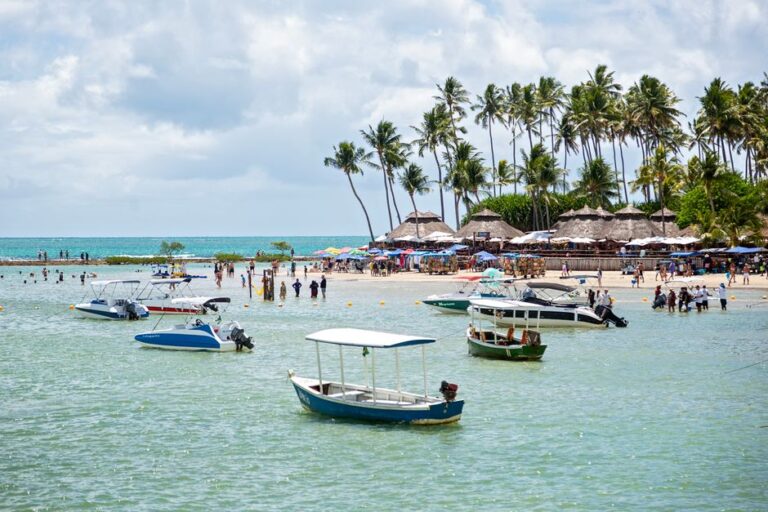
Travel south to Porto de Galinhas on Day 3—take a bus or rental car (30 kilometers, 45 minutes). This fishing village turned resort town is famous for natural pools and snorkeling. Stay in a pousada or small hotel; rates are R$ 150–300 per night. The main beach is lined with restaurants and bars, though it’s crowded with tour groups.
Natural Pools and Snorkeling
Porto de Galinhas’s signature draw is its natural pools—shallow coral and rock formations that trap warm seawater at low tide, creating natural aquariums. Tours depart daily via jangada (traditional wooden fishing boat) from the beach; trips cost R$ 120–180 per person and last three to four hours. Snorkeling equipment is usually included. Visibility is best between November and March. Alternatively, visit nearby Praia de Muro Alto (10 minutes by buggy) for reef snorkeling without a boat. Some operators, like Atalaia Turismo, offer sunrise trips for a quieter experience (book through your pousada or direct).
Village Life and Local Food
Porto de Galinhas’s charm lies in its fishing heritage. Stroll the pier at dawn to watch jangadas return with the catch; many restaurants buy direct and serve fresh fish the same day. Order peixada (fish stew, R$ 50–80) or grilled grouper (moqueca estilo local, R$ 60–90). On Day 4, rent a buggy for R$ 100–150 to explore nearby beaches: Praia do Espelho (dramatic red cliffs), Praia de Maracaípe (calm lagoon, good for families), and Praia de Carne de Vaca. These are less crowded than Porto itself and offer a taste of village life.
Days 5–6: Maceió
On Day 5, travel south to Maceió (80 kilometers, 90 minutes by bus or car). Maceió is Alagoas’s capital and a broader, more cosmopolitan base than Porto de Galinhas. Book a hotel or pousada in the central Ponta Verde or Pajuçara neighborhoods (R$ 200–400/night). Maceió’s beaches lack Porto’s tourist crowds and feel more authentic.
Coral Reefs and Beach Relaxation
The city’s main beach, Praia de Pajuçara, is known for calm waters and reef snorkeling. Tour operators along the beach offer reef trips via small boats (jangada or speedboat) for R$ 100–160 per person. Visibility is comparable to Porto de Galinhas, and fewer tourists means a more local vibe. Spend one day snorkeling; dedicate the other to beach lounging, meals, and exploring the oceanfront promenade (orla). Kiosks serve fresh coconut water (R$ 8) and grilled squid skewers (R$ 15–20).
For a cultural shift, visit the Instituto Histórico e Geográfico de Alagoas (small museum in downtown Maceió, free entry) or walk through the Centro, where colonial facades and street vendors fill the commercial district. Markets like the Mercado do Jaraguá sell local crafts, hammocks, and beach gear.
Day 7: Penedo and Return
On your final day, consider a half-day trip to Penedo, a 45-minute drive north along the São Francisco River mouth. This small town is less touristy than Porto de Galinhas or Maceió—colorful buildings perched on cliffs overlooking the river estuary create a photogenic backdrop. Stroll the town, eat fresh river fish at a riverside restaurant (R$ 40–65), and return to Maceió for your evening flight back to São Paulo or Rio. Alternatively, spend your last day on Maceió’s beaches or catch a sunset from the orla before departure.
Best Time to Visit and Budget Breakdown
The Northeast’s dry season runs September to March, with warm, sunny days and calm seas ideal for snorkeling. December to February peak tourist season; April to August bring more rain and occasional storms but fewer crowds. Water temperature stays 26–28°C year-round.
A seven-day budget estimate (per person, mid-range): flights R$ 400–600, pousadas/hotels R$ 1,050–2,100 (7 nights), meals R$ 35–70 daily (R$ 245–490 total), snorkeling tours R$ 240–360 (two trips), local transport R$ 100–150, activities and miscellaneous R$ 200. Total: approximately R$ 2,235–3,700. Budget travelers can reduce pousada costs to R$ 120–180/night and eat at local comedores (casual eateries) for R$ 25–40, dropping the total to R$ 1,700–2,300.
Practical Tips and Safety
Bring reef-safe sunscreen (SPF 50+) and respect coral by not stepping on reefs or using petroleum-based products. The sun is intense; reapply after swimming. Carry cash in reais; many small vendors don’t accept cards, though major restaurants and pousadas do. ATMs are available in Recife, Porto de Galinhas, and Maceió.
Beaches are generally safe during daylight and in populated areas. Avoid Recife’s inner beaches at night; Boa Viagem has a police presence, but petty theft occurs in crowds. Porto de Galinhas and Maceió are safer overall. Check current safety advisories before travel, and ask your accommodation about safe neighborhoods and walking routes. Respect local customs: don’t display expensive jewelry or cameras, and dress respectfully when visiting religious sites like churches in Olinda.
Frequently Asked Questions
Do I need a rental car in Northeast Brazil?
A car is optional but helpful; buses connect major towns affordably (R$ 25–45), but a rental (R$ 90–150/day) offers flexibility for exploring smaller beaches like Praia do Espelho and Praia de Muro Alto.
What's the best season for snorkeling in Porto de Galinhas and Maceió?
November through March offers the highest visibility and calmest seas. June through August bring occasional rain and rough water, but fewer tourists and lower prices.
Are Northeast Brazil beaches safe?
Urban beaches like Recife's Boa Viagem are generally safe in daylight but warrant caution at night; Porto de Galinhas and Maceió are safer overall. Avoid displaying valuables and follow local advice on which neighborhoods to visit.
